
Is Sealing Film the Right Fit for Your Delivery-Focused Business?
For café owners, bubble tea shops, and fast-food brands, choosing between sealing film and cup lids can directly impact customer satisfaction. According to the 2025 Food Service Logistics Report, 68% of food delivery complaints stem from spills and leaks. The right cup sealing solution is about more than just leak prevention—it needs to balance cost, storage, and brand image. Many operators fall into the trap of focusing solely on upfront pricing, overlooking long-term costs like equipment maintenance and inventory waste. In this guide, you'll learn exactly when to use sealing film, when to opt for cup lids, and master practical tips to avoid common pitfalls.
sealing film
Definitions & Material Types
1. What is Sealing Film?
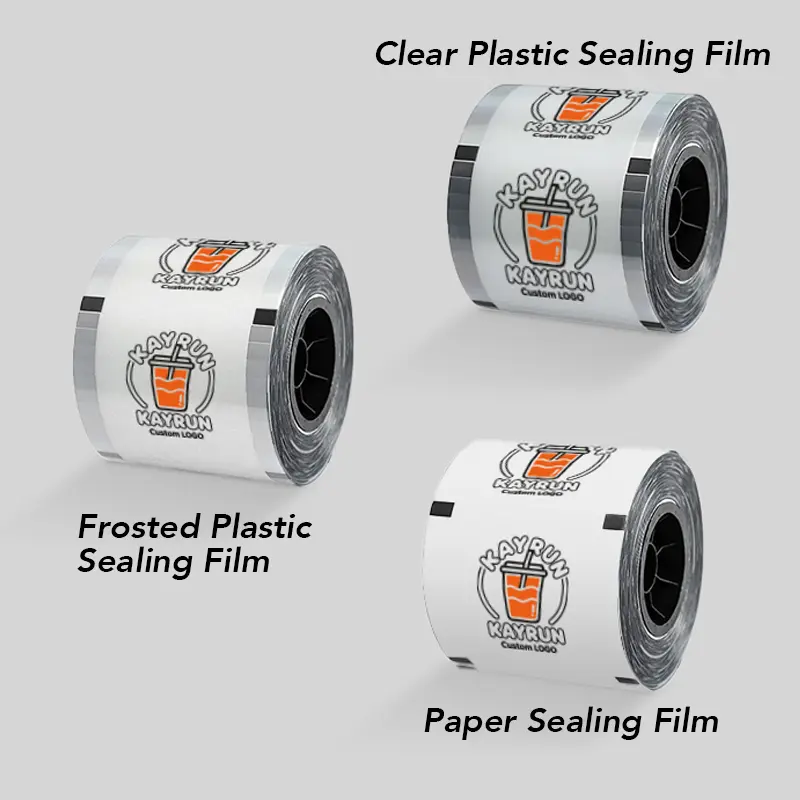
Sealing film is a disposable material that requires a heat sealer (an essential tool for this method) to create an airtight seal on cup rims. A single roll typically seals 2,000–4,000 cups, making it ideal for high-volume stores. Common material types and their uses include:
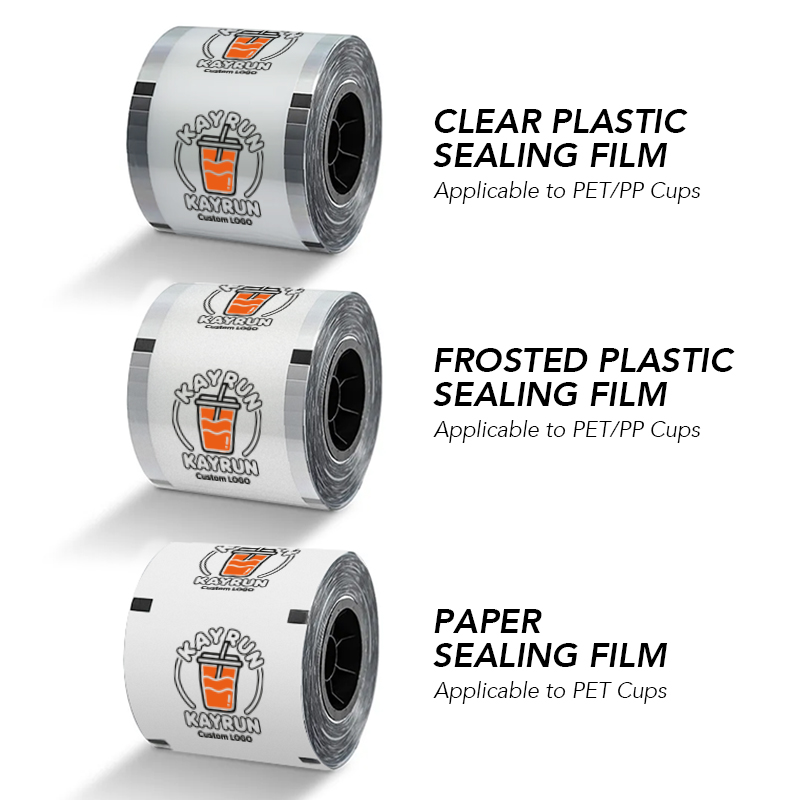
- PP Sealing Film: Strong adhesion, tear-resistant, and only compatible with PP cups. The 95mm size is the industry standard for most bubble tea shops.
- PET Sealing Film: The most versatile option, compatible with PP, PET, paper, and biodegradable PLA (polylactic acid) cups—perfect for stores using multiple cup materials.
- Paper-Based Sealing Film: Coated with PE for water resistance, this eco-friendly option works with paper or some PP cups, aligning with zero-waste brand values.
- Aluminum Foil Sealing Film: Excellent barrier properties, ideal for drinks requiring long-term freshness (e.g., pre-packaged yogurt, cold-pressed juice).
2. What are Cup Lids?
Cup lids are pre-formed covers that require no additional equipment— a "ready-to-use" solution for fast-paced service. Most lids come in 90mm or 95mm sizes (matching standard cup diameters) and require no staff training. Common disposable cup lid types include:
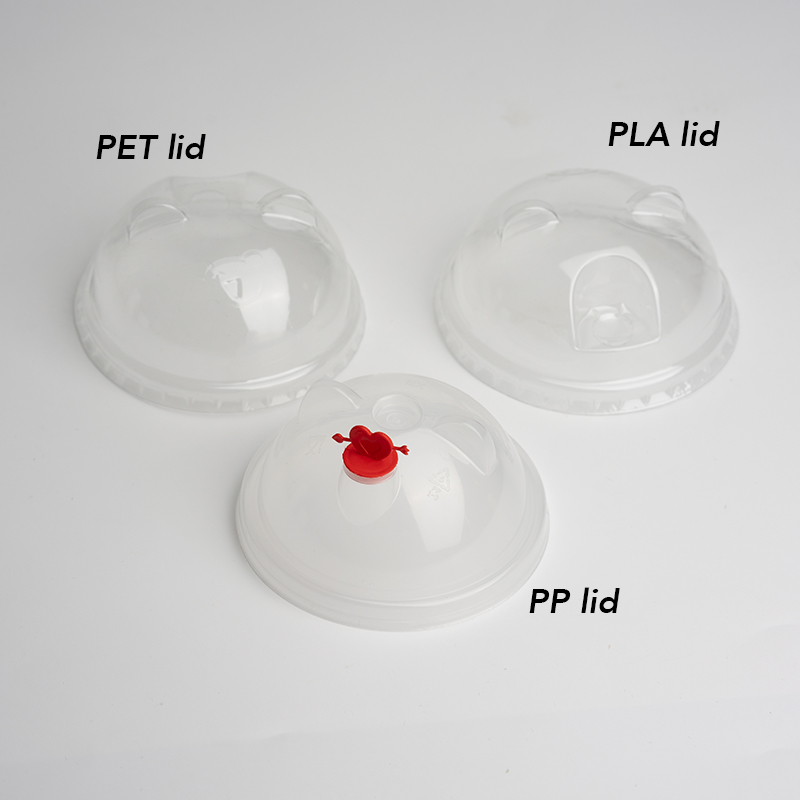
- PP/PET Plastic Lids: Low-cost and widely used, with a temperature resistance range of -20℃ to 100℃. Flat lids suit regular drinks, while dome lids accommodate toppings like cream or boba.
- Paper-Based Lids: Compostable and eco-friendly but less water-resistant—best for short-term consumption (e.g., in-store coffee).
Head-to-Head Comparison: Pros & Cons
The choice between sealing film and cup lids directly impacts costs and customer experience. Below is a data-driven comparison across 8 key dimensions:
|
Comparison Dimension |
Sealing Film |
Cup Lids |
|
Leak Prevention |
Pros: Hermetic seal reduces delivery spill rates to under 1% (compatible with DoorDash, Uber Eats, etc.)<br>Cons: Material mismatch causes 25% of sealing failures |
Pros: Low spill risk for in-store consumption<br>Cons: Straw/Drink holes prone to leakage; 5–8% delivery spill rate |
|
Unit Cost |
Pros: As low as 40 roll seals 4,000 cups)<br>Cons: Requires heat sealer depreciation (200/year) |
Pros: No equipment investment; flexible small-batch purchases<br>Cons: 0.04 per cup (1 box of 2,000 lids = 80) |
|
Storage Needs |
Pros: 1 roll replaces 2,000–4,000 lids, saving 80% storage space<br>Cons: Requires dry, light-protected storage to maintain adhesion |
Pros: No special storage requirements<br>Cons: 2,000 lids occupy 2 standard carton spaces |
|
Operational Efficiency |
Pros: 2 seconds per cup with training (automatic sealers process 300+ cups/hour)<br>Cons: 1–2 hours of staff training; monthly equipment cleaning |
Pros: 1 second per cup; no training (ideal for high-staff-turnover stores)<br>Cons: Manual operation limits to 150 cups/hour |
|
Branding Potential |
Pros: Full-surface custom printing (logos/slogans) boosts social media engagement by 20% (perfect for Instagram-worthy drinks)<br>Cons: 6-roll MOQ for 1–3 colors; 24+ rolls for 4–6 colors |
Pros: Simple logo printing on select styles<br>Cons: Limited printing space; low brand visibility |
|
Eco-Friendliness |
Pros: 30–50% less plastic than traditional lids; paper/PLA options are biodegradable<br>Cons: Most plastic films are hard to recycle |
Pros: PP/PET lids recyclable; compostable paper lids available<br>Cons: Higher overall plastic usage than sealing film |
|
Material Compatibility |
Pros: PET film works with most cup types (PP/PET/paper/PLA)<br>Cons: PP film only fits PP cups—easy compatibility mistakes |
Pros: Most lids fit same-diameter paper/plastic cups<br>Cons: 10% of irregular cups (e.g., wide-mouth smoothie cups) fit poorly |
|
Customer Experience |
Pros: Contamination-proof; tamper-resistant (requires straw piercing)<br>Cons: Inconvenient to open without a straw |
Pros: Sip-on-the-go design; high portability<br>Cons: Gaps trap dust; weak tamper resistance |
sealing film
Scenario-Based Decision Guide: When to Choose Which?
The best sealing solution depends on your business needs. Here are the key scenarios:
1. 3 Scenarios to Prioritize Sealing Film
Sealing film is ideal for delivery-focused, brand-driven, or high-volume operations:
- Stores with ≥60% delivery orders (e.g., bubble tea, smoothie shops): Eliminate spill complaints and protect drinks during transit.
- Chain brands pursuing differentiation: Turn packaging into a marketing tool with custom-printed film (e.g., seasonal slogans for limited-edition drinks).
- High-volume stores (≥500 cups/day): 1,000/year.
2. 3 Scenarios to Prioritize Cup Lids
Cup lids work best for small, flexible, or in-store-focused businesses:
- Startups/small stores (≤300 cups/day): Avoid upfront heat sealer costs (300) to reduce initial financial pressure.
- Specialty drink menus: Dome lids accommodate toppings (fruit, foam, extra boba) that can't fit under sealing film.
- Stores using multiple cup materials: Lid versatility avoids compatibility issues when switching between paper, plastic, or irregular cups.
3. Quick Decision Checklist (60-Second Tool)
Answer these 5 questions to choose your solution:
- Do delivery orders make up over 50% of sales? → Yes → Sealing Film; No → Cup Lids
- Do you need packaging to reinforce brand identity? → Yes → Sealing Film; No → Cup Lids
- Do you sell over 300 cups/day? → Yes → Sealing Film; No → Cup Lids
- Do your drinks have spill-prone toppings? → Yes → Cup Lids; No → Sealing Film
- Is your initial equipment budget under $500? → Yes → Cup Lids; No → Sealing Film
Practical Tips & Pitfall Avoidance
Choosing the right solution is only half the battle—here's how to maximize its value:
1. Sealing Film Best Practices (3 Key Tips)
Avoid sealing failures and waste with these steps:
- Match Materials Precisely: Use PP film only with PP cups; opt for PET film for multi-material stores (solves 70% of compatibility issues).
- Calibrate Heat Sealer Temperature: Overheating melts film; underheating weakens seals—temperature errors increase failure rates by 30%.
- Use Within 1 Month of Opening: Exposure to air reduces adhesion, raising failure rates by 15%.
2. Cup Lid Best Practices (2 Critical Checks)
Minimize leaks and fit issues:
- Choose Lids with Sealing Gaskets: Rubber gaskets reduce spill risk by 40% (prioritize heat-resistant materials for hot drinks).
- Verify Diameter Compatibility: 90mm lids don't fit 95mm cups—test samples before bulk orders.
3. Cost Optimization Strategies
Reduce long-term expenses with these tactics:
- Sealing Film: Buy 10+ rolls for 15–20% lower unit costs; standardize on PET film to simplify inventory.
- Cup Lids: Choose stackable designs to cut storage waste by 20%; use reusable silicone lids for in-store service to reduce disposable costs.
sealing film
Conclusion & Call to Action
Ultimately, there's no "better" option—only the right one for your business:
- Sealing Film: Perfect for delivery-heavy, high-volume, or brand-focused stores.
- Cup Lids: Ideal for small, in-store-focused businesses with limited budgets or specialty menus.
As a trusted supplier of food packaging solutions, dgkayrun offers a full range of high-quality sealing film and cup lids, including PP/PET/paper/biodegradable options. We support custom brand printing, flexible small-batch orders, and provide expert advice on material compatibility and cost optimization.
To explore products, request custom quotes, or order samples, visit our official website: https://aiwebks3mb4.s2.cmerweb.com/. Our team is ready to deliver one-on-one tailored solutions to help your business reduce costs, boost efficiency, and elevate your brand.