
What Makes a Disposable Cup Truly Eco-Friendly?
If you've been spending more time in your coffee shop lately, chances are you've overheard conversations like this: a customer picks up their iced Americano, glances at the cup, and asks the barista, "Is this cup biodegradable? When are you switching to eco-friendly cups?"
Whether in North America or Australia, the question "Is this cup sustainable?" has shifted from a bonus to a basic expectation over the past couple of years. Coffee shop owners often find this topic a bit frustrating when chatting privately: they've followed the trend and switched to cups labeled "green," so why aren't customers convinced? Because people are slowly realizing that not every cup printed with eco-friendly claims truly meets their expectations. In this article, we'll break down, from a coffee shop owner's perspective, what makes a cup genuinely sustainable — and how to choose one without falling into greenwashing traps.
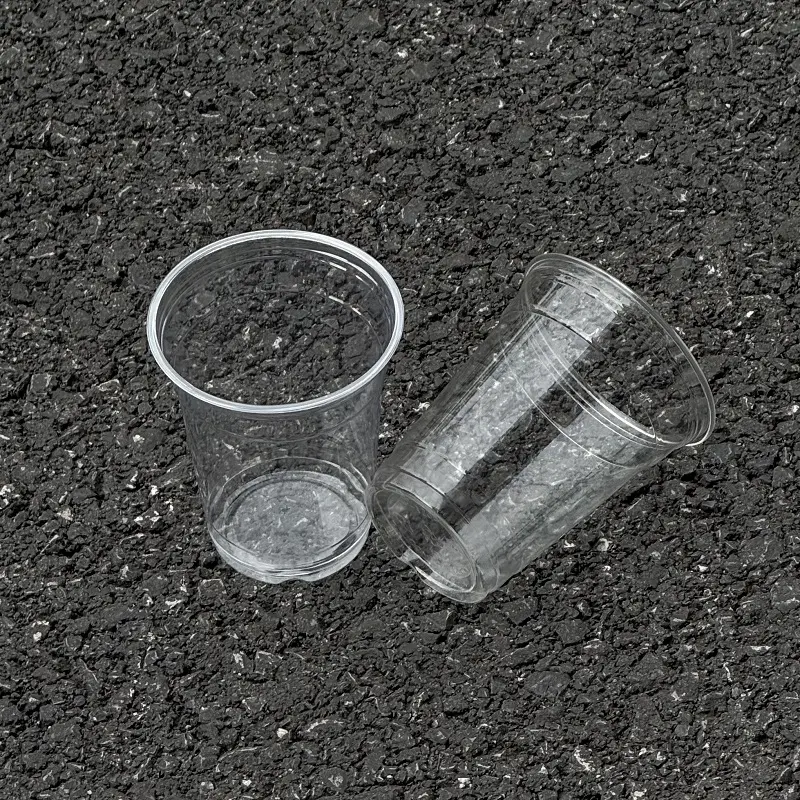
The "Green" Label Isn't Always What It Seems
Let's start with a common scenario. Some owners, eager to jump on the sustainability bandwagon, order a batch of cups labeled "biodegradable" from a supplier. A few months later, they get called out on social media: "That material doesn't degrade in normal environments — it requires industrial composting facilities." The owners feel embarrassed and wronged — they paid extra, yet their reputation took a hit.
The core issue lies with the "green label" itself. In the world of disposable cups, "eco-friendly" is a very broad term. It might mean recyclable, compostable, bio-based, or biodegradable — each with completely different end-of-life requirements. For a coffee shop, what truly matters isn't which trendy word is printed on the cup, but whether you can confidently explain the cup's entire lifecycle when environmentally conscious customers walk through your door.
PLA, Paper, or Recycled PET — Which One Actually Fits Your Business
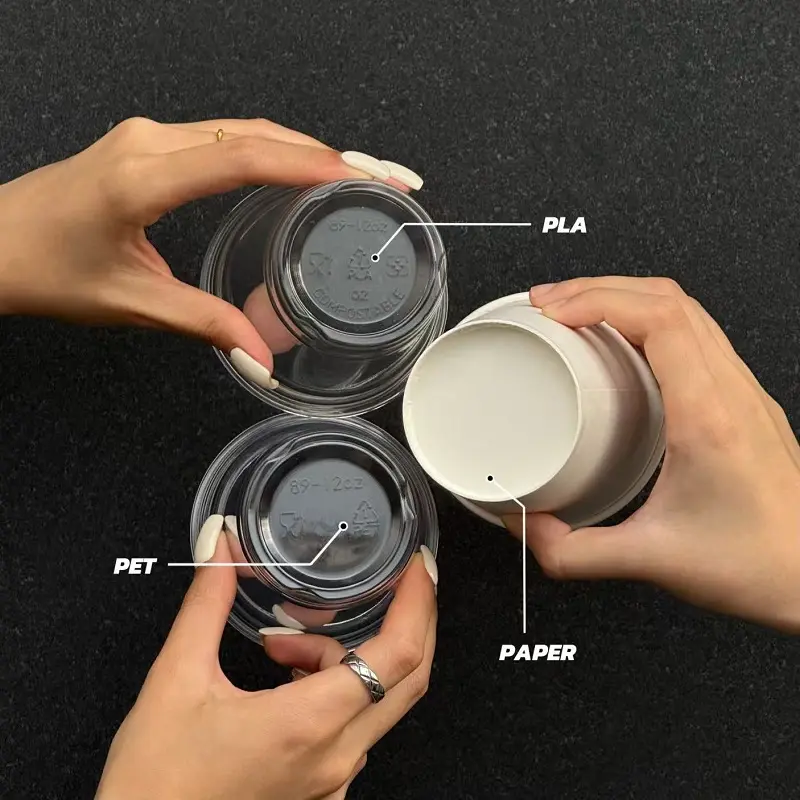
Currently, there are three main types of eco-friendly cups on the market. Each has its strengths and best-use scenarios — no single "universal answer" exists.
- PLA cups are made from renewable resources like corn starch. They look and feel similar to traditional plastic cups, making them visually appealing for cold drinks. However, they face a significant hurdle: they need commercial composting conditions to effectively biodegrade. If tossed into a regular trash bin or a home compost pile, they won't break down much faster than conventional plastic. If your city has a mature commercial composting system, PLA cups are a great option. If not, their environmental benefits are hard to deliver in practice.
- Paper cups are the go-to for hot beverages and often feel the most "eco-friendly" to customers. But to prevent leaks, the inner wall usually has a coating of PE or PLA. PE-coated cups require separating the paper from the plastic film during recycling — a step that many standard recycling facilities can't manage. PLA-coated paper cups have better compostability, but they still depend on proper composting infrastructure. So when choosing paper cups, don't just look at "paper"; always ask what the coating is made of.
- rPET cups are made from recycled plastic bottles — essentially giving existing plastic a second life. Their advantage is that they are accepted by curbside recycling systems in many areas, and they offer the same clarity as virgin PET for cold drinks. If some of your customers care more about "reducing new plastic production" than "avoiding plastic entirely," rPET is an easy-to-understand and easy-to-explain option.
The point here isn't to discourage you from choosing sustainable cups — quite the opposite. Every material has a suitable application. The key is to understand your local waste management infrastructure, recycling policies, and which customer expectations you most want to address.
What Those Certifications (FDA, LFGB, FSC) Really Mean
Many coffee shop owners are overwhelmed by acronyms when sourcing cups — FDA, LFGB, FSC pop up everywhere. They're not as complicated as they seem.
- FDA certification (U.S. Food and Drug Administration) means the cup's material is safe for food contact and won't leach harmful substances into your customer's coffee.
- LFGB is the European equivalent for food contact material safety, with similarly high standards. If your supplier can provide both, you can be confident the product meets mainstream safety requirements in Western markets.
- FSC (Forest Stewardship Council) is specific to paper products. It verifies that the paper comes from responsibly managed forests. If your shop uses paper cups, having the FSC logo on the cup or sleeve sends a clear positive signal to North American customers: "The 'past life' of this cup didn't harm forest resources."
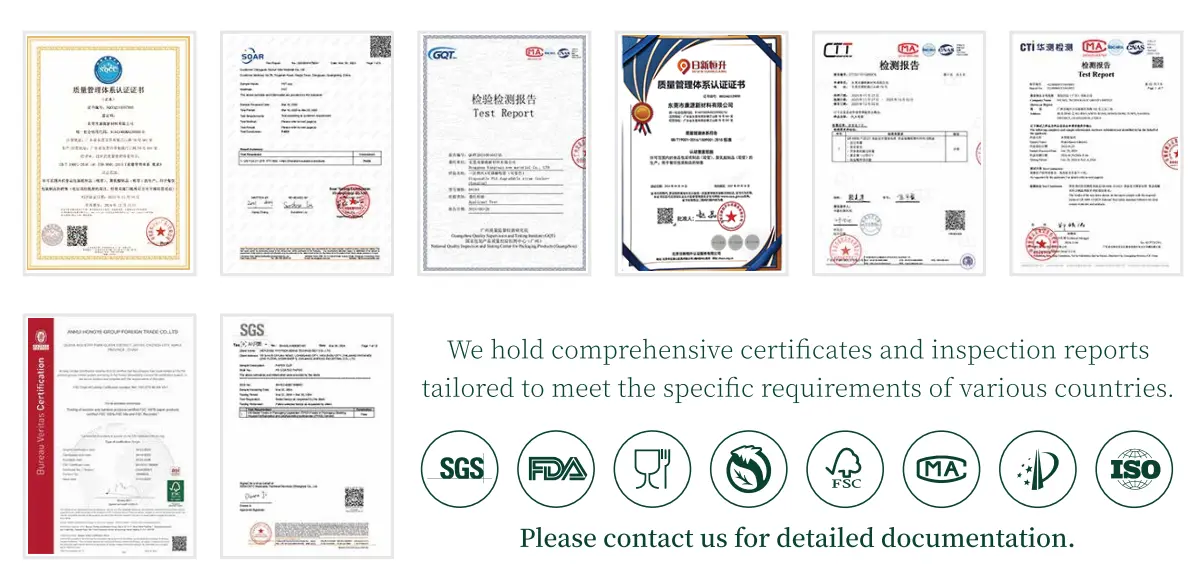
For coffee shop owners, these certifications serve the same purpose: they give you a simple, credible way to prove that your selection is responsible. So when dealing with suppliers, this is a dimension worth focusing on. Manufacturers like KayRun make FDA, LFGB, and FSC certifications their baseline standards — the cups are sterilized and tested before they leave the factory, rather than scrambling for reports when a customer asks. This "homework done for you" approach is a real time-saver for owners already juggling too much information.
Why More Coffee Shops Are Asking for "Full Transparency" From Suppliers
There's another clear trend: owners are no longer satisfied with a supplier saying "our products are eco-friendly" and sending a PDF. They want traceable, transparent information — from raw material sources to production processes to certification details. They want to see the circular economy in action and verify that there's no hidden greenwashing.
The logic behind this shift is simple. Customers now do "background checks" on brands via social media. If a coffee shop claims to use sustainable cups but can't produce a proper certification document, trust erodes. Conversely, if a supplier builds high supply chain transparency from the start, the owner can confidently answer customer questions — talking openly about where the cups come from, what materials are used, and how to properly dispose of them to minimize carbon footprint and waste.
Making the Switch Without the Headache
Switching to eco-friendly cups doesn't have to mean changing every cup size at once. Many shops start by testing one or two best-selling cup types, observing customer feedback and real-world operations, then gradually expand. At the same time, it's crucial to choose a manufacturer that supports small trial orders. Some factories offer flexible minimum order quantities, allowing you to test a small batch in one or two locations — see how the market reacts — before scaling up. This avoids excessive inventory and high costs from a single wrong decision.
Ultimately, choosing truly eco-friendly disposable cups isn't a race against time. It's a process of gradually getting closer to the right answer — reducing environmental impact while keeping your business practical. Start by knowing which material you're using and understanding the conditions required for its end-of-life (composting or recycling). Once you do that, you're already ahead of most.