
PP vs PET vs Paper: Choosing the Cup That Fits Your Menu
Running a food and beverage business means making countless decisions. Even the most basic supply—cups—can become a nightmare if you choose the wrong one. Many shop owners have experienced those frustrating moments: a bad review pops up saying the cup was already soft and leaking inside the delivery bag; or using the same cup for an entire summer, only to find the lid of your iced drink cup is loose and leaky, while the hot drink cup is too hot to hold.
The truth is, a better cup isn't always more expensive, and more eco-labels don't automatically mean it's the right fit. What matters most is how well the cup matches your specific menu and usage scenarios. Let's break down the three most mainstream disposable cups—PP cups, PET cups, and paper cups—and how they perform in real-world conditions.
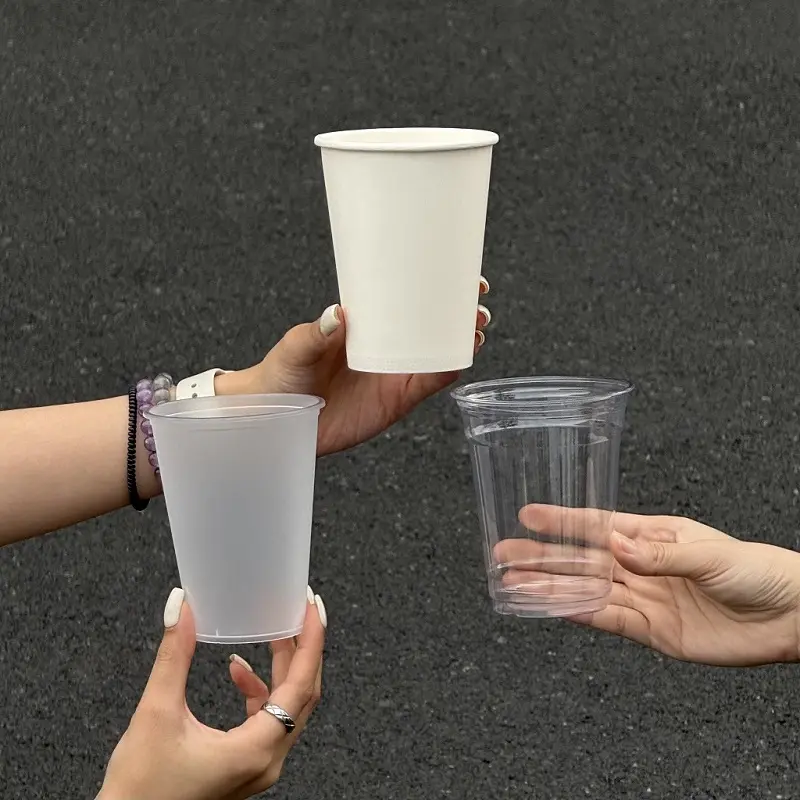
Not All Cups Are Created Equal — And the Wrong Choice Can Cost You
Let's be honest: the cost of picking the wrong cup is bigger than you think. It's not just about bad reviews or customer complaints—it's also about hidden losses. For example, if you use a cold drink cup that can't handle heat, it might warp during summer delivery, causing leaks. You lose not just that drink, but the customer's trust in your packaging. Or if you choose a paper cup with thin walls for hot coffee, your baristas might need double-cupping or extra sleeves, quietly driving up your material costs over time.
You don't need to be a material engineer, but understanding how these cup types perform with cold drinks, hot drinks, and delivery will help you control operating costs and reduce complaints.
PP Cups: The Workhorse for Cold Drinks and Large Orders
PP cups are the default choice for many bubble tea shops and cold drink specialists. Their strengths are solid: excellent impact resistance (they don't crack easily), flexible texture that won't split when sealing or lidding large iced drinks or beverages with toppings, and enough heat tolerance for everyday cold drink scenarios. Plus, the unit price is affordable.
For shops with high daily volume and a large share of delivery orders, PP cups are a proven, reliable option. If your menu targets young North American customers and features topping-rich iced drinks, PP cups are basically unavoidable.
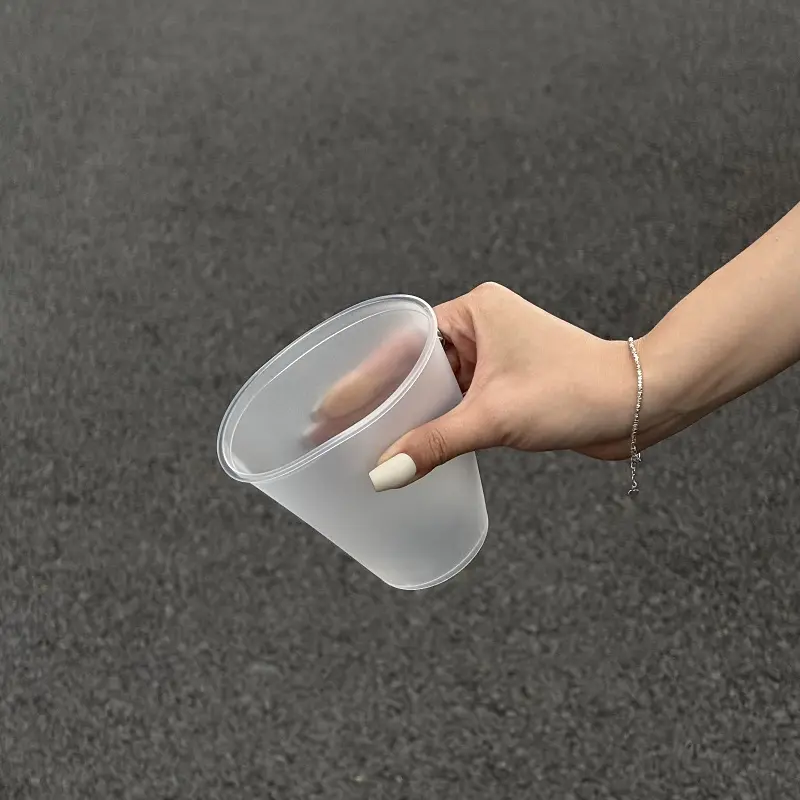
PP Cup
PET Cups: When Transparency and Aesthetics Matter
PET cups stand out for their incredible clarity—almost glass-like transparency. That defines their main use case: layered drinks, brightly colored teas, and specialty drinks with fruit slices. The visual appeal of these drinks is part of the experience. Handing a customer a PET cup or having them scroll past a blurry photo of one can completely change your conversion rate.
But PET cups have their limits. They're best for cold drinks and shouldn't be used for high-temperature beverages. In contrast, PP cups have a wider temperature range, handling both hot and cold well. A practical rule: if you sell visually-driven cold drinks, PET is your glass display case.
For brands that want custom printing, the transparent surface of PET cups gives designers lots of freedom. Some shops skip full-body printing and instead add a small logo and a short phrase, letting the drink's color become the background. This restrained approach is popular among independent coffee brands in Australia.
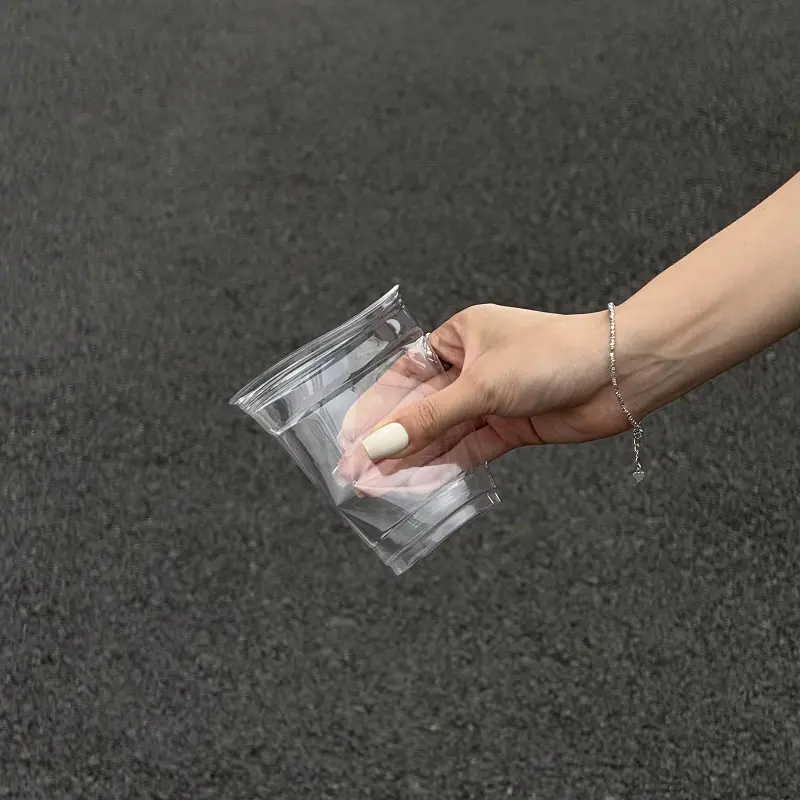
PET Cup
Paper Cups: The Hot Drink Champion and Eco-Friendly Option
In the hot drink category, paper cups still hold the crown. Their natural insulation feels better than plastic—customers can hold a hot coffee or tea without burning their hands. Paper cups are also more easily associated with eco-friendliness, even though (as we've discussed) recyclability depends on the coating.
One critical point when choosing paper cups for hot drinks: wall thickness and body stiffness directly affect the user experience. A quality paper cup won't go soft immediately when filled with hot liquid, and it feels secure in hand. Reputable source factories perform thickness and seal tests on every batch, catching issues before the cups ever reach you.
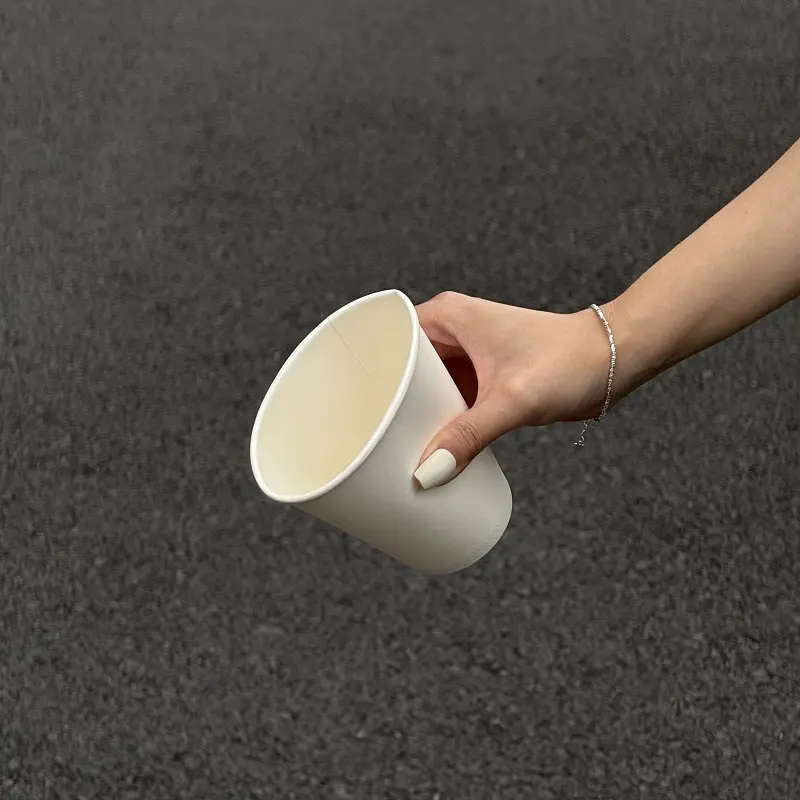
Paper Cup
A Quick Decision Guide: Matching Cup Type to Your Menu
Most shops don't use just one cup type. A practical combination: use PP cups or PET cups for your best-selling cold drinks based on "visual needs"—PET for layered or fruity drinks that need to show off, PP for regular cold drinks where clarity isn't critical. Set up a separate hot drink line with paper cups and matching lids. For delivery, consider thicker walls to reduce accident risks. Organize these ideas into a clear purchasing request for your supplier. Saying "I need this combination of cups" is much better than "I need to buy cups."
What to Ask Your Supplier Before Placing an Order
A cup's real-world performance depends partly on the material and partly on the manufacturing quality control. So when you talk to a supplier, focus on a few key points: Does the product have complete food-contact safety certifications (FDA, LFGB, etc.)? Is the minimum order quantity flexible, especially if you want to test small quantities of a specific cup type? And does the factory have the capability to handle multiple processes? A source factory that can produce both injection-molded and thermoformed cups means you can consolidate different cup types under one supplier, making inventory management and relationship maintenance much easier.
Taking a little time to understand your own needs before choosing cups will save you a lot of headaches later. Every saved complaint, every avoided leak-related redelivery—that upfront effort in cup selection pays off.